
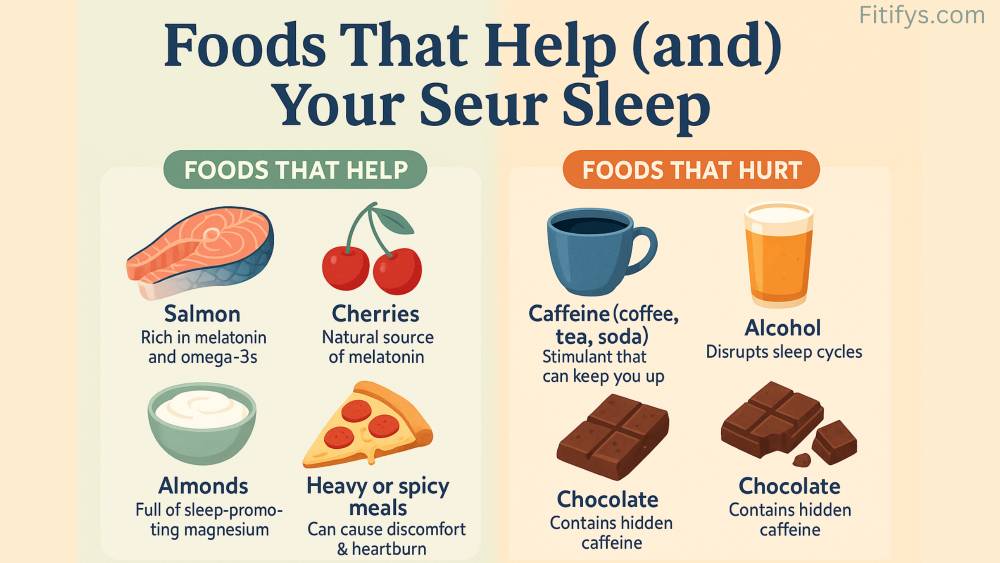
Foods That Help (and Hurt) Your Sleep
What you eat could be the reason you’re tossing and turning—or sleeping like a baby. Foods that help you sleep – mayo clinic.
We all know sleep is essential. Foods that make you sleepy fast. It’s the reset button our brain and body need every night. But here’s something many of us overlook: what you eat throughout the day—especially in the evening—can play a big role in how well you sleep.
Ever had a night where you just couldn’t get comfortable, your mind raced, and you stared at the ceiling for hours? You might want to take a closer look at what was on your dinner plate (or late-night snack list).
Let’s talk about the foods that help you sleep like a rock—and the ones that might be sabotaging your shut-eye. Sleep-inducing foods.
> Foods That Help You Sleep Better
These foods support your natural sleep cycle by calming your brain, boosting melatonin, and keeping your blood sugar steady through the night.
1. Almonds.
- abundant in magnesium, a mineral that is known to enhance the quality of sleep.
- Your muscles will relax if you take a tiny handful an hour before bed.
2. Bananas
- Packed with potassium and magnesium.
- Also contain tryptophan, which your body uses to make melatonin.
3. Oats
- Melatonin and complex carbohydrates can be found in whole oats.
- They aid in the synthesis of insulin, which increases the brain’s availability of tryptophan.
4. Kiwi
- Studies have shown eating kiwi before bed may improve sleep onset and duration.
- It’s full of antioxidants and serotonin, a chemical that helps regulate sleep.
5. Chamomile Tea
- Although it’s not food per se, it’s a potent bedtime ritual.
includes apigenin, an antioxidant that promotes drowsiness by binding to brain receptors.
6. Turkey
- Another food high in tryptophan.
- Have you ever wondered why Thanksgiving dinner makes you feel so drowsy? This could be the reason!
7. Tart Cherries or Cherry Juice
- Melatonin levels are naturally high.
- Before going to bed, you might find that a small glass of tart cherry juice helps you fall asleep more quickly.
Foods That Hurt Your Sleep
These foods either stimulate your brain, spike your blood sugar, or mess with your digestion—making it harder for you to drift off or stay asleep.
1. Caffeine (Coffee, Energy Drinks, Chocolate)
- Seems obvious, but caffeine can stay in your system for 6–8 hours.
- Even an afternoon coffee can mess with your ability to fall asleep at night.
2. Spicy Foods
- Can cause heartburn and indigestion, especially if eaten close to bedtime.
- That hot curry might taste amazing—but your sleep may pay the price.
3. Fatty or Fried Foods
- Harder to digest, which can disrupt sleep as your body struggles to break them down.
- Think burgers, fries, and anything deep-fried.
4. Sugar and Sweets
- High sugar intake can lead to blood sugar crashes in the middle of the night.
- That 10 p.m. cookie binge might be why you’re wide awake at 2 a.m.
5. Alcohol
- While it might make you feel sleepy at first, it actually disrupts your sleep cycle.
- You’re more likely to wake up during the night or feel groggy the next morning.
An Example from Real Life
As a busy nurse and mother, Sarah used to have trouble falling asleep, especially after working late shifts. She was wired but exhausted when she got home. What is her favourite snack? A glass of wine and a bowl of sugary cereal. She began to fall asleep more quickly and wake up feeling more rested after substituting a banana with almond butter and a cup of camomile tea.
Sometimes, small food swaps really can change your nights.
Best Bedtime Snack Combos
If you need a little something before bed, try these combos:
- Greek yogurt + tart cherries
- Oatmeal + banana slices
- Whole-grain toast + almond butter
- Turkey slices + a few whole-grain crackers
Aim to eat your last meal or snack at least 1–2 hours before bed so your body has time to digest.
Concluding remarks
Your bedtime ritual begins in the kitchen, not when your head touches the pillow. You can prepare yourself for deeper, more restful sleep by selecting foods that promote your body’s natural rhythms and avoiding those that throw it off.
So, instead of eating late-night chips tonight, make yourself a cup of tea to help you fall asleep. Your brain and body will appreciate it.
FAQs
Q1: Can I eat right before bed if I’m hungry?
Yes, but keep it light. Choose sleep-friendly foods like a banana, a small handful of nuts, or a piece of whole-grain toast. Avoid heavy, greasy, or sugary options.
Q2: Does drinking milk before bed actually help?
Yes, it can! Milk contains tryptophan and calcium, which help the brain use tryptophan to produce melatonin. Warm milk is also a comforting bedtime ritual for many.
Q3: I wake up at 3 a.m. hungry—what should I do?
This might be a sign of a blood sugar dip. Try having a balanced bedtime snack that includes both protein and carbs, like Greek yogurt with berries or a slice of toast with nut butter.
Looking for more sleep, health, and fitness tips that fit your busy life? Visit Fitifys.com—your go-to space for wellness that works for real people.