How Much Exercise Do You Really Need for Optimal Health?
You’ve probably heard different answers to this question: “You need 30 minutes a day,” “You should work out five times a week,” “Cardio is king,” or “Strength training is a must.” “Weekly workout duration”
With so much advice flying around, it’s easy to feel confused—or worse, overwhelmed.
The truth? You don’t need to become a gym rat to stay healthy. In fact, getting the right amount of exercise for optimal health is simpler (and more doable) than most people think.
Optimal workout time.
What the Experts Recommend/lifestyle
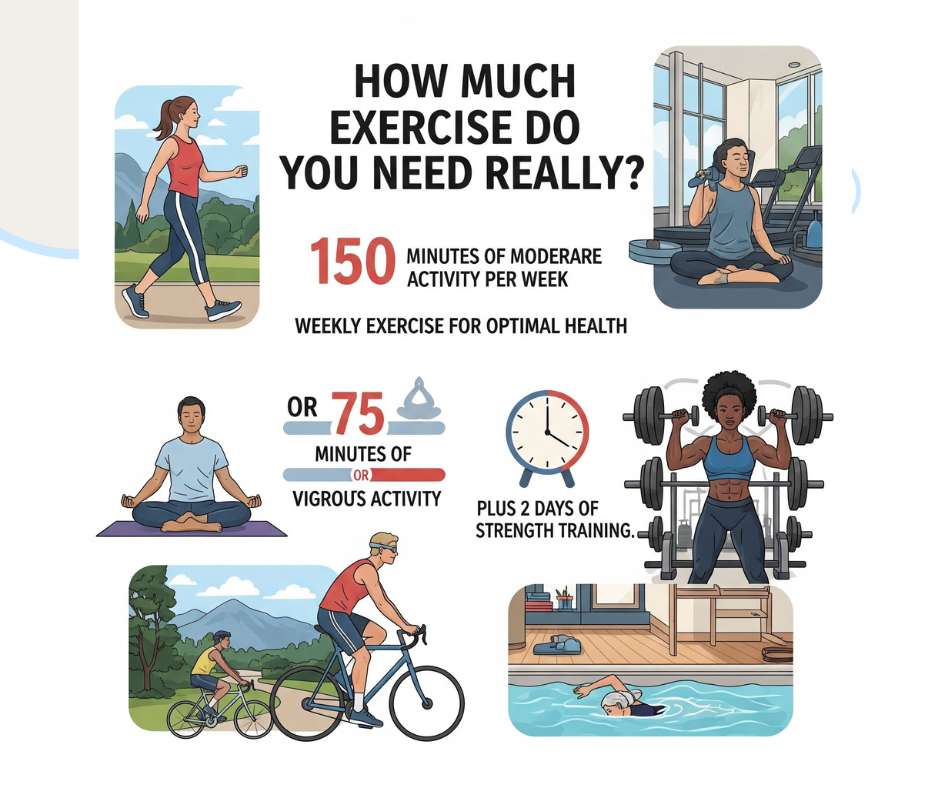
Let’s start with the basics. According to the World Health Organization and CDC, adults should aim for:
- 150 to 300 minutes of moderate-intensity aerobic activity per week
OR - 75 to 150 minutes of vigorous-intensity activity
AND - Muscle-strengthening activities 2 or more days a week
Sounds like a lot? Let’s do the math.
- That’s about 30 minutes a day, five times a week.
- Or 15–25 minutes of more intense movement, three to five times a week.
And “aerobic activity” doesn’t have to mean running for an hour on a treadmill. Walking briskly, dancing, cycling, or even vacuuming with some enthusiasm counts.
What Counts as “Moderate” or “Vigorous” Exercise?
Physical activity levels.
- Brisk walking
- Light biking
- Swimming
- Playing with your kids (yes, chasing them counts!)
- Mowing the lawn
You’re working hard enough to raise your heart rate but can still hold a conversation.
Vigorous-Intensity Activities:
- Running or jogging
- HIIT workouts
- Jump rope
- Fast-paced sports (like soccer or tennis)
- Spin classes
You’re breathing heavier and probably can’t say more than a few words at a time.
Strength Training: Don’t Skip It
If cardio helps your heart, strength training supports your muscles, joints, and bones.
You don’t need heavy weights or a gym membership. Bodyweight exercises like squats, lunges, push-ups, and planks are plenty effective.
Try strength training 2–3 times per week, giving your muscles a day to recover between sessions.
Real Life Example: Busy But Active
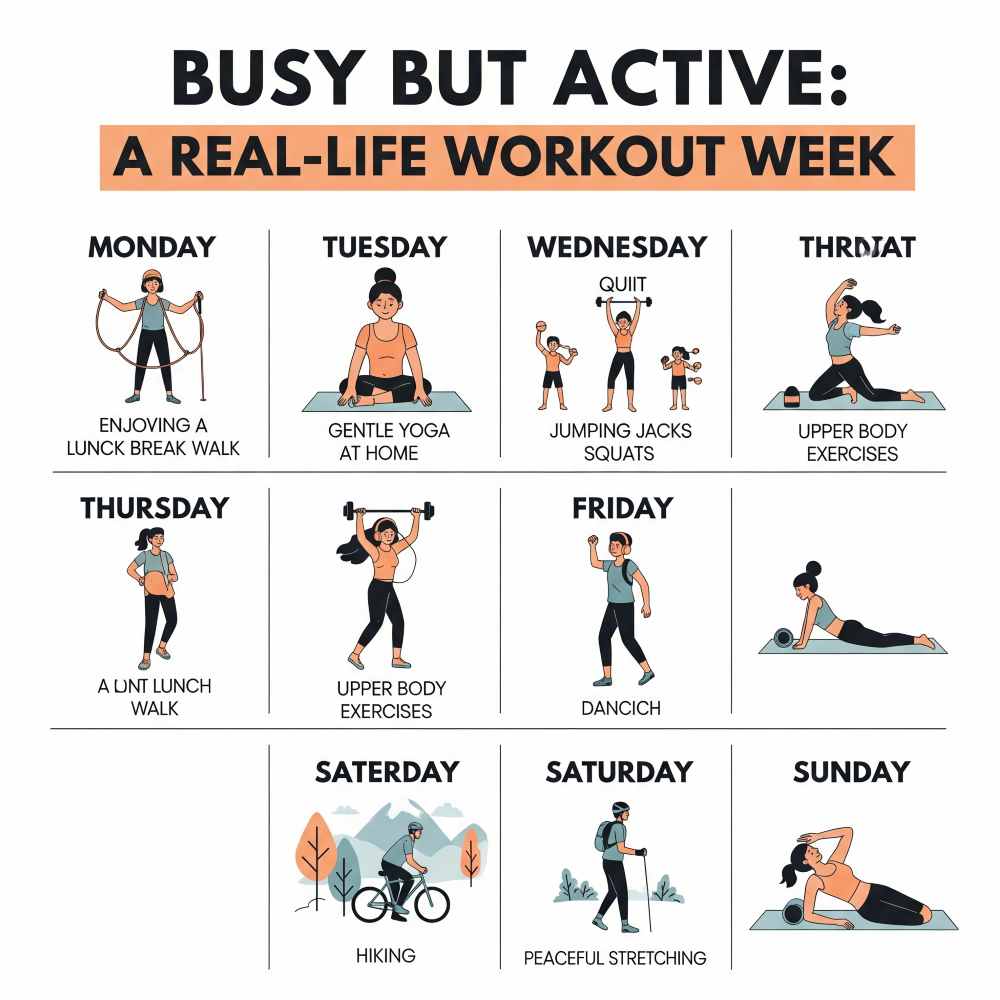
Let’s say you have a busy schedule but want to stay healthy. Here’s what a realistic week might look like:
Monday:
20-minute brisk walk at lunch + 10-minute resistance band workout
Tuesday:
Rest day or light yoga/stretching
Wednesday:
25-minute HIIT session (jumping jacks, bodyweight squats, planks)
Thursday:
20-minute walk + 15-minute upper body strength workout
Friday:
Rest or a fun dance workout
Saturday:
Hike, bike ride, or active outdoor activity
Sunday:
Light stretching or mobility work
It doesn’t have to be perfect. The key is consistency—not perfection.
Benefits of Getting Just Enough Exercise
Even if you’re not hitting the gym daily, moving your body regularly pays off in major ways:
- Improved energy and focus
- Better mood and less stress
- Stronger immune system
- Reduced risk of chronic diseases like diabetes and heart issues
- Better sleep quality
- Stronger muscles and bones
And here’s the fun part: the more you move, the more you’ll want to move. Momentum builds naturally.
How to Know If You’re Doing Enough
Ask yourself:
- Do I move my body most days of the week?
- Am I getting a little out of breath during at least some of my activities?
- Do I feel stronger or more energized after I move?
If you answered yes to those, you’re probably doing great.
But if not, start small. Try 10 minutes a day. Even a short walk or stretching session counts. You’ll feel the difference over time.
Tips for Staying on Track
- Schedule it like a meeting – put it on your calendar
- Keep it simple – a short workout is better than none
- Do what you enjoy – hate running? Try dancing or swimming
- Use habit stacking – pair your workout with another habit (like stretching while watching TV)
Final Thought
You don’t need to overhaul your life to get healthy. You just need to move—consistently. A little bit every day adds up fast. Whether it’s walking, stretching, dancing, or lifting, the best kind of exercise is the one you’ll actually do.
So start where you are. Take that first step—literally if you want—and let your body thank you later.
For more tips, guides, and no-nonsense wellness advice, check out https://fitifys.com.
FAQs
Q1: What if I don’t have 30 minutes a day to exercise?
No problem! You can break it into smaller chunks—like three 10-minute walks. Every bit counts.
Q2: Do I need to join a gym to get results?
Not at all. Home workouts using bodyweight or resistance bands can be just as effective when done regularly.
Q3: Can walking really improve my health?
Absolutely. Brisk walking helps your heart, joints, and mood—and it’s super easy to fit into daily life.