HIIT Workouts: Are They Safe for Everyone?
HIIT (High-Intensity Interval Training) has taken the fitness world by storm—and for good reason. It’s quick, intense, and can torch calories even after your workout is over. But the real question is: Is HIIT safe for everyone?
If you’re curious about whether HIIT is the right fit for your body and goals—or wondering how to do it without risking injury—you’re in the right place. Let’s break it down together, simply and honestly.
What Exactly Is HIIT?
HIIT stands for High-Intensity Interval Training, and it’s exactly what it sounds like. Short bursts of intense exercise (like sprinting or burpees) followed by brief rest or lower-intensity movement.
A typical HIIT session might look like:
- 30 seconds of jump squats
- 15 seconds of rest
- Repeat for 20 minutes
You can use HIIT with cardio, strength training, or a mix of both. It’s flexible, fast, and doesn’t require a gym.
The Big Benefits of HIIT
Why do so many people swear by HIIT? Because it delivers results, especially for busy folks.
Perks include:
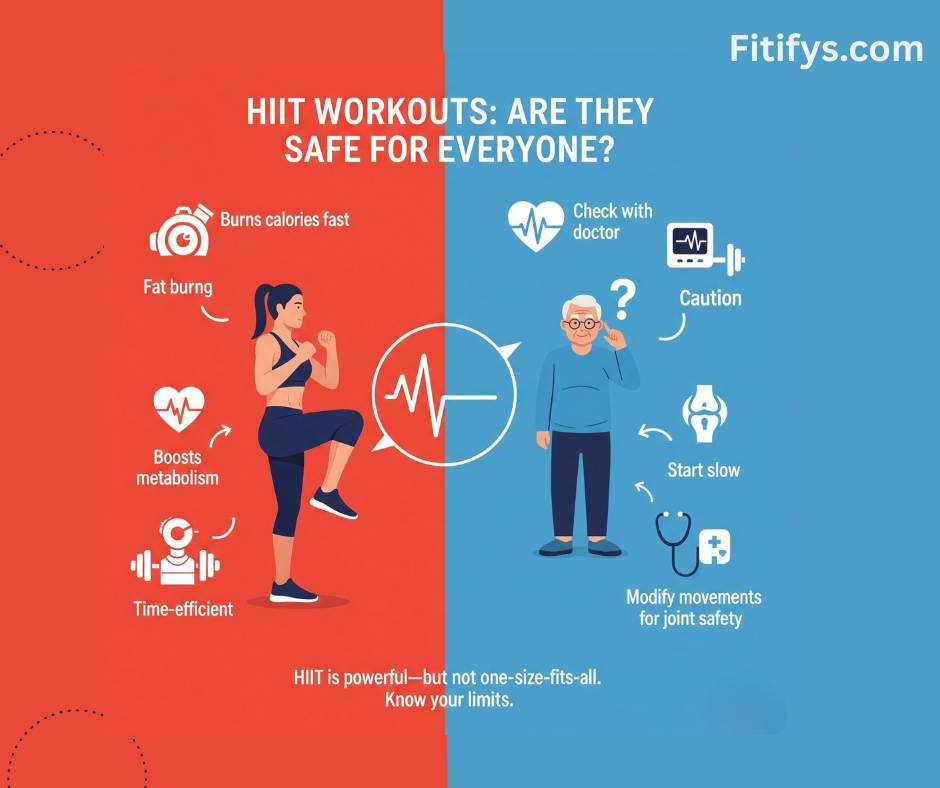
- Burns a lot of calories in a short time
- Boosts metabolism for hours after exercise
- Improves heart health
- Supports fat loss without losing muscle
- Takes less than 30 minutes
Sounds amazing, right? But here’s the thing—HIIT isn’t one-size-fits-all.
Is HIIT Safe for Everyone?
Here’s the honest answer: Not always.
HIIT is intense by nature. And while that can be great for fat loss and endurance, it also puts stress on your heart, joints, and muscles.
Let’s look at who should proceed with caution—and how to modify workouts for safety.
Who Should Be Careful with HIIT?
1. Beginners
If you’re brand new to exercise, jumping into HIIT can feel overwhelming and increase your injury risk. Start with basic bodyweight workouts or light cardio for a few weeks before adding intervals.
2. People with Heart Conditions
HIIT raises your heart rate rapidly. If you have high blood pressure, arrhythmia, or other heart issues, always check with your doctor first.
3. Joint or Mobility Issues
Knees, hips, and ankles take a pounding during explosive moves. If you’ve had past injuries or chronic pain, modify the movements or opt for low-impact HIIT.
4. Pregnant or Postpartum Women
HIIT during pregnancy or right after giving birth isn’t always safe. It depends on your fitness level, medical guidance, and how your body is healing. Always consult a healthcare provider first.
How to Make HIIT Safer (and Smarter)
HIIT doesn’t have to mean pushing yourself to the edge every time. Here’s how to do it safely:
Start with Low-Impact Intervals
Instead of jump squats, try bodyweight squats. Replace sprinting with brisk walking. You’ll still get results—without hurting yourself.
Keep Your Form in Check
Quality over speed, always. If you can’t do a move with good form, slow down or switch it up.
Choose the Right Work-to-Rest Ratio
A good place to start:
20 seconds work / 40 seconds rest
Build up to 30/30 or 40/20 as your endurance improves.
Warm Up and Cool Down
Don’t skip this. 5–10 minutes of gentle movement before and after can prevent soreness and injury.
Listen to Your Body
Sweating and feeling challenged is good. Sharp pain, dizziness, or chest tightness is not. Rest when needed.
Real Talk: What Worked for Me
When I first tried HIIT, I jumped into a 30-minute video with no warm-up, no breaks, and zero modifications. Five minutes in, I twisted my knee doing jump lunges. Lesson learned.
Now I stick to:
- 20-minute sessions
- Bodyweight-only movements
- Low-impact options like step-ups or marching in place
And I feel stronger and safer.
Sample HIIT Routine (Beginner-Friendly)
Try this 15-minute full-body HIIT you can do at home—no equipment needed.
Warm-up (3 minutes):
- Arm circles
- March in place
- Gentle squats
Workout (2 rounds):
Work 30 sec / Rest 30 sec
- Bodyweight squats
- Push-ups (knee or regular)
- Step-back lunges
- Plank shoulder taps
- High knees (or march in place)
Cool down (2–3 minutes):
- Stretch your legs, arms, and back
- Deep breaths
So… Is HIIT Worth Trying?
Absolutely! HIIT can be an incredible tool—if you use it wisely. The key is making it work for you. It’s not about pushing to the limit every time. It’s about finding your pace, building gradually, and staying consistent.
Whether you’re squeezing in a 15-minute workout between meetings or doing a weekend challenge with friends, HIIT can fit your lifestyle without wrecking your body.
Final Thoughts
HIIT isn’t a magic fix—but it can be a powerful part of your fitness plan. The most important thing is to listen to your body and choose a routine that fits your current level.
At https://fitifys.com, we believe fitness should be safe, simple, and doable—even on your busiest days. Try a few intervals, see how you feel, and build from there.
FAQs
Q1: Can I do HIIT every day?
Nope—your body needs time to recover. 2–3 times a week is plenty, especially when you’re just starting. Alternate with strength training or walking.
Q2: What’s the best time of day to do HIIT?
Whenever you feel most energized! Morning, lunch break, or evening—just make sure you’ve eaten something light beforehand and warmed up properly.
Q3: Is HIIT better than steady-state cardio?
It depends on your goals. HIIT is great for burning calories fast and improving cardiovascular health, but steady cardio is gentler and great for endurance. Mix both for the best results.
Need help starting your first HIIT plan? Drop by https://fitifys.com for free printable workouts, routines, and motivation that fits into real life.