

Best Post-Workout Recovery Tips for Muscle Growth
You’ve crushed your workout. Your muscles are burning, sweat’s dripping, and you’re feeling like a total beast. But here’s the thing—what you do after the workout matters just as much as what you did during it. Yep, recovery is where the real muscle magic happens.
If you’re aiming to build muscle and avoid feeling like a stiff robot the next day, you need a recovery plan that works with your body, not against it. Let’s break down the best post-workout recovery tips in a simple, real-life way.
Why Recovery is a Big Deal
Think of working out as breaking things down—literally. You’re creating tiny tears in your muscle fibers. Recovery is the phase where your body repairs and rebuilds those fibers, making them stronger and bigger.
No proper recovery = no muscle gains. It’s that simple.
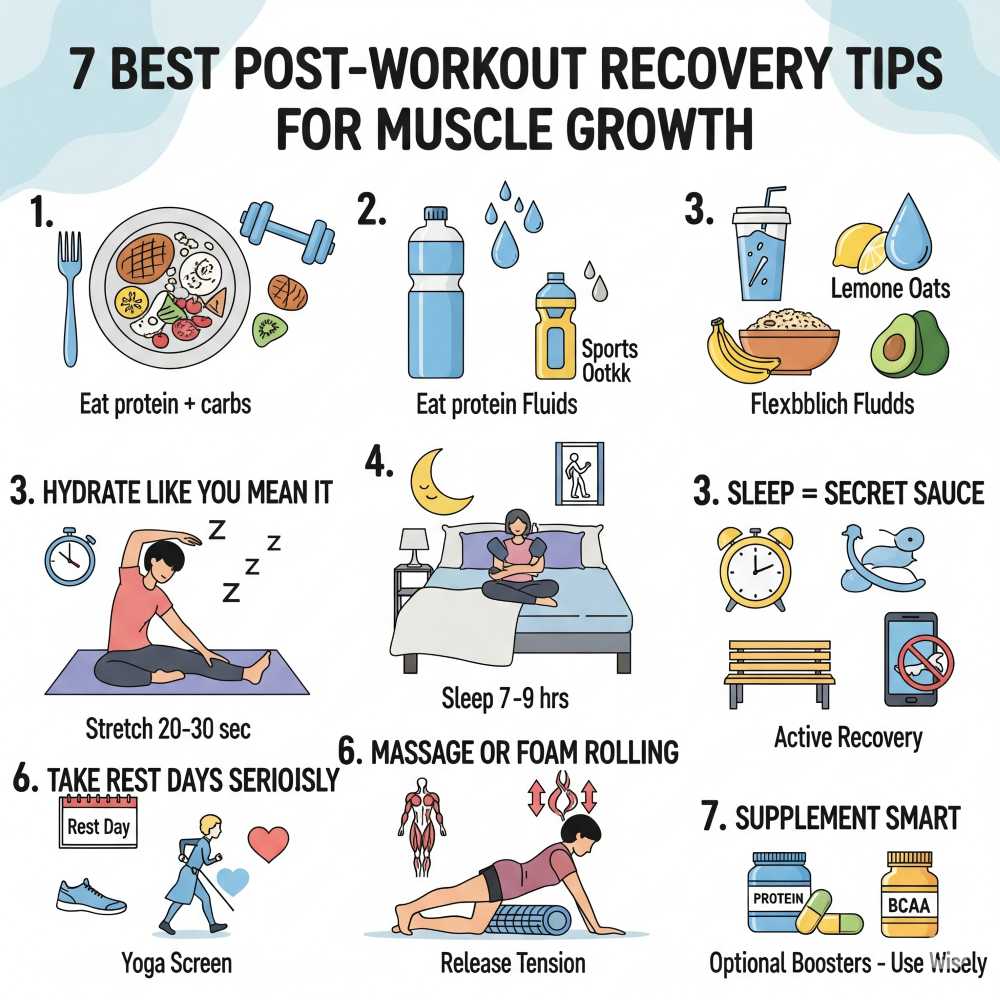
1. Refuel with the Right Food
After you train, your body’s begging for nutrients to kickstart the repair process.
What to eat post-workout:
- Protein: Helps rebuild muscle. Think grilled chicken, Greek yogurt, eggs, or a good ol’ protein shake.
- Carbs: Replenish your glycogen (energy) stores. Try rice, sweet potatoes, bananas, or oats.
- Healthy fats: Not essential post-workout but good for overall recovery. Nuts, avocado, or olive oil work well.
Personal tip: I used to skip carbs after a workout thinking it’d help me stay lean. Big mistake. Once I added carbs back in—boom! More energy and faster muscle gains.
2. Hydrate Like You Mean It
Even mild dehydration can slow down your recovery.
Post-workout hydration tips:
- Aim for 16–24 oz (500–700 ml) of water within an hour after training.
- Add a pinch of salt or a sports drink if you had a really sweaty session.
If your pee is lemonade-colored, you’re good. If it’s dark yellow? Time to chug some water.
3. Stretch It Out
A short stretch session can help reduce soreness and keep your muscles loose.
Focus on:
- Hamstrings, quads, calves (if you did lower body)
- Chest, shoulders, back (after upper body)
Hold each stretch for 20–30 seconds. Don’t bounce—just breathe and sink into it.
Even 5 minutes can make a huge difference.
4. Sleep = Secret Sauce
Sleep is when your body goes into full repair mode.
- Aim for 7–9 hours a night.
- Try to keep a consistent bedtime.
- Reduce screen time before bed (yep, TikTok can wait).
When I started sleeping better, my strength went up, my soreness went down, and my mood got a major upgrade.
5. Take Rest Days Seriously
No, you don’t need to go hard 7 days a week. Muscles grow when you rest, not when you’re grinding non-stop.
Try this:
- Active recovery (like a walk, yoga, or light bike ride) the day after a tough workout.
- Full rest days at least once or twice a week, depending on your training intensity.
A good training plan includes rest days. Don’t skip them.
6. Massage or Foam Rolling
If you’ve ever rolled out your quads on a foam roller, you know it’s a love-hate relationship.
Benefits:
- Breaks up muscle tightness
- Increases blood flow
- Speeds up recovery
Try it right after your workout or before bed. Start slow—it gets easier (and less painful) with time.
7. Supplement Smart (Only If Needed)
Supplements aren’t magic, but some can help with recovery.
Popular options:
- Whey protein – For muscle repair
- Creatine – Helps with strength and recovery
- BCAAs or EAAs – If you train fasted or need extra aminos
Stick to basics. No need to blow your paycheck on ten tubs of powder.
Recap: Your Post-Workout Recovery Checklist
Eat protein and carbs within an hour
Drink plenty of water
Stretch or do light movement
Prioritize good sleep
Respect rest days
Foam roll or massage sore muscles
Supplement only if needed
Remember: consistency beats intensity. It’s not just about what you lift, but how you recover.
FAQs
1. How soon after a workout should I eat?
Ideally within 30 to 60 minutes. Your muscles are most receptive during this “window,” but don’t stress if you miss it by a bit—just get in that meal.
2. Is soreness a sign of a good workout?
Not always. Some soreness is normal, especially with new exercises, but no soreness doesn’t mean no progress. Recovery and performance are better signs.
3. Can I train the same muscles every day?
Nope. Muscles need at least 48 hours to fully recover. If you’re sore, switch to a different muscle group or take a rest day.
4. Does stretching really help with recovery?
Yes, especially when paired with hydration and movement. Stretching improves blood flow and flexibility, which can ease post-workout tightness.
5. What’s more important—food or sleep?
Both are crucial, but sleep wins for overall recovery. No matter how clean you eat, poor sleep will slow your gains.
Need more tips like this delivered to your inbox? Sign up for updates at Fitifys.com and never miss a smart, no-BS fitness tip again.
Let me know if you’d like a printable recovery checklist or a follow-up post about active recovery workouts!


