How to Avoid Muscle Loss While Cutting Weight
Yes, you can burn fat and keep your hard-earned muscle—here’s how.
Trying to lose fat without losing muscle can feel like walking a tightrope. You want to shed the extra weight, but not at the cost of the strength and muscle you’ve built (or are trying to build). The good news? If you do it correctly, you can have both. Lean muscle maintenance.
We’ll explain in this guide how to maintain muscle mass while losing weight using easy techniques that anyone can use. These tips can help you maintain your strength while cutting, regardless of how long you’ve been cutting or how new you are to fitness. Cutting diet and training plan.
Why Muscle Loss Happens When Cutting
When you create a calorie deficit (eating fewer calories than you burn), your body turns to stored energy—usually fat. But if you’re not careful, it can also dip into your muscle tissue for fuel. This often happens when people:
- Cut calories too aggressively
- Don’t eat enough protein
- Skip strength training
- Do too much cardio
- Don’t get enough rest
The result? You lose weight—but it’s not the kind you want to lose.
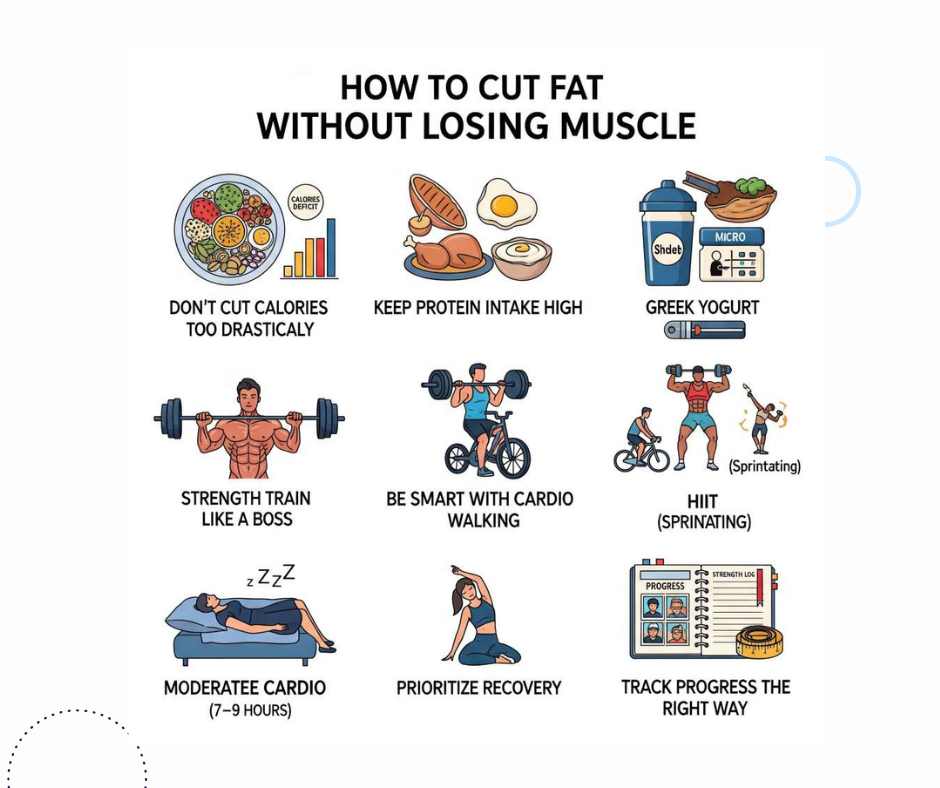
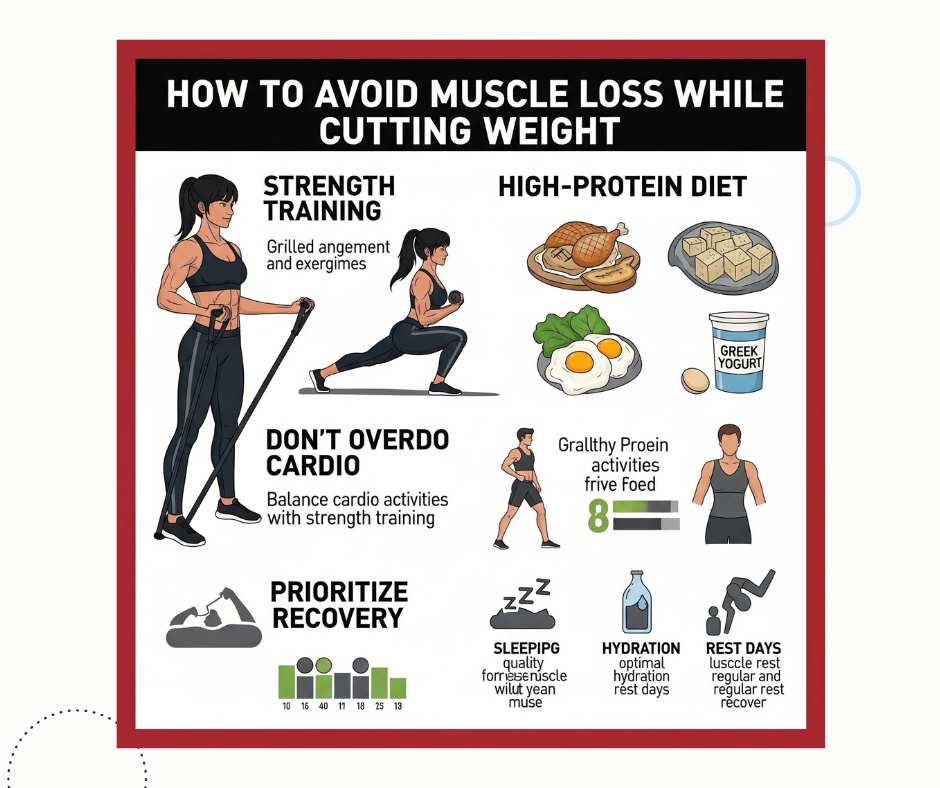
1. Don’t Cut Calories Too Drastically
The number one mistake people make when trying to cut is eating way too little. Sure, you’ll drop pounds fast—but a lot of it will be muscle and water weight.
Aim for a moderate deficit:
- 300–500 calories per day is enough to see steady fat loss without harming your muscle.
- Use an online calculator to estimate your needs, or talk to a fitness coach or nutritionist for guidance.
The slower you go, the more likely you are to keep the muscle.
2. Keep Protein Intake High
Protein is your muscle’s best friend during a cut. It helps preserve muscle tissue, supports recovery, and even keeps you feeling full longer.
How much protein?
- A general rule: 0.8–1 gram per pound of body weight per day.
- If you weigh 150 lbs, aim for around 120–150 grams of protein daily.
Easy high-protein foods:
- Chicken breast
- Greek yogurt
- Eggs
- Cottage cheese
- Lentils & beans
- Protein shakes
Split your protein throughout the day—don’t just load up at dinner.
3. Strength Train Like a Boss
Think you should swap weights for cardio during a cut? Think again.
Strength training is essential for preserving muscle while in a calorie deficit. You won’t necessarily build new muscle while cutting, but you’ll maintain what you’ve got—and that’s the goal.
Tips for strength training while cutting:
- Stick to compound lifts (squats, deadlifts, rows, presses)
- Train each muscle group at least twice a week
- Keep lifting heavy (don’t switch to only light weights/high reps)
Remember: muscle is “use it or lose it.” Keep using it.
4. Be Smart with Cardio
Cardio is great for heart health and helps create a calorie deficit. But too much can eat into your recovery—and your muscle.
Balance is key:
- 2–4 sessions of moderate cardio per week is plenty
- Consider HIIT (High-Intensity Interval Training) to burn fat while maintaining muscle
If you’re strength training hard and eating well, there’s no need to run for hours on end.
5. Prioritize Recovery
Muscles grow and repair when you rest—not while you’re working out. When cutting, your body needs even more care because you’re putting it under extra stress.
What recovery looks like:
- 7–9 hours of sleep each night
- At least one full rest day per week
- Managing stress through walks, breathing, or hobbies
Sleep isn’t lazy—it’s muscle maintenance.
6. Track Progress the Right Way
The scale doesn’t tell the whole story. While cutting, your weight might stall or even go up some days (especially if you’re holding onto water).
Instead, track:
- Progress photos (weekly)
- Measurements (waist, hips, chest)
- How your clothes fit
- Strength in workouts
Sometimes your body is changing even if the number on the scale isn’t.
Real-World Example: Alex’s Cut Done Right
Alex, 32, wanted to drop 15 pounds without losing his strength. Instead of crash dieting, he cut 400 calories a day, upped his protein, and lifted weights 3 times a week. After 10 weeks, he was down 12 pounds, still hitting PRs in the gym, and feeling stronger than ever.
Final Thoughts
Losing fat without losing muscle takes a little strategy—but it’s 100% doable.
Focus on sustainable eating, strength training, adequate protein, and smart recovery. You don’t have to suffer through crash diets or endless cardio sessions. In fact, those often backfire.
Your goal is to feel leaner, stronger, and energized—and with these habits, you’ll get there the healthy way.
Need a printable cutting checklist or weekly meal and workout tracker? Let me know, and I’ll whip one up for you!
FAQs
Q1: Is it possible to gain muscle while cutting?
Although most people will maintain rather than build, it is possible, especially for novices. When you can, aim for strength PRs and maintain your gains.
Q2: What kind of cardio is ideal for a cut?
Cardio at a moderate intensity, such as brisk walking or cycling, is excellent. HIIT is also beneficial, but balance it with your recuperation.
Q3: What is the ideal duration for a cutting phase?
The majority of people recover well after 8–12 weeks of cutting. If you continue, you may begin to lose muscle or feel exhausted. Next, switch to maintenance or take a break.