How to Track Your Exercise Progress Effectively
If you’ve ever started a fitness routine full of motivation, only to feel stuck weeks later, you’re not alone. It’s easy to wonder, “Am I actually making progress?” The good news is that tracking your exercise progress doesn’t have to be complicated—or boring. With a few simple strategies, you can stay motivated, see results, and make your workouts more rewarding.
Why Tracking Your Progress Matters
Imagine baking a cake without ever checking the oven—you’d have no idea how it’s turning out! Tracking your workouts is like peeking in to make sure things are on track. It:
- Shows you how far you’ve come (hello, motivation boost!).
- Helps you identify what’s working and what’s not.
- Prevents plateaus by encouraging you to mix things up.
- Keeps your fitness routine focused and goal-oriented.
Step 1: Define Your Goals Clearly
In order to properly monitor your fitness progress, you must first establish specific, SMART goals (Specific, Measurable, Achievable, Relevant, and Time-bound) that will serve as a strong basis for your fitness journey. Set a specific goal, like “lose 10 pounds in 12 weeks” or “increase my deadlift by 50 pounds in 6 months,” as opposed to a general one like “get fitter.” This first step is essential because it gives you direction and a precise benchmark by which to gauge your success.
Before you track anything, ask yourself: What am I trying to achieve? Be specific. For example:
- “I want to run 5K without stopping in 8 weeks.”
- “I’d like to increase my squat weight by 20 pounds.”
- “I’m aiming to exercise at least 4 times a week for a month.”
Having a clear goal gives your tracking purpose. It’s like using a map instead of wandering aimlessly.
Step 2: Choose Your Tracking Method
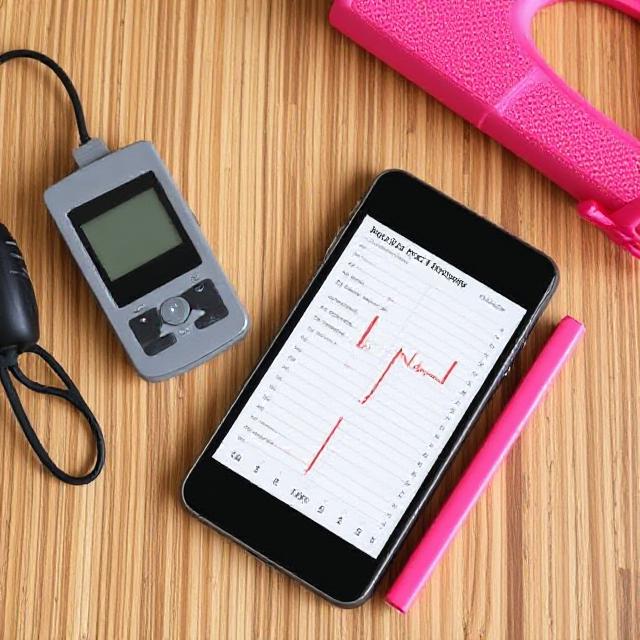
Step 2 entails selecting a tracking technique and reliable resources, like a wearable fitness tracker, a specialized app, or a fitness journal, in order to efficiently monitor your exercise progress.To get a full picture of your journey, you should also include metrics such as your workouts (sets, reps, weight), body measurements (waist, hips, etc.), progress photos, and your feelings.
There’s no one-size-fits-all approach. Pick a method that fits your lifestyle:
1. Fitness Apps
Apps like MyFitnessPal, Strava, or Fitbod can track your workouts, log your lifts, and even analyze your progress over time.
Real-life tip: I started using a simple step-counting app, and just seeing my daily numbers motivated me to take the stairs more often. Small wins matter!
2. A Workout Journal
Sometimes, pen and paper work best. Write down your exercises, weights, reps, and how you felt. It’s simple, reliable, and satisfying to look back on.
3. Spreadsheets or Online Logs
If you like visuals and charts, spreadsheets are great for spotting trends over weeks or months.
Step 3: Measure What Matters
Measurable metrics linked to your objectives, such as workout data (sets, reps, weight), body composition (weight, body fat, measurements), and performance benchmarks (run times, strength personal records), should be tracked in order to measure what matters. Additionally, take into account qualitative information such as mood and energy levels, and regularly record and evaluate your progress using tools like workout journals and fitness applications.
Not every metric is helpful for every goal. Focus on the data that truly reflects your progress:
- Strength training: Track weights, sets, reps, and rest times.
- Cardio workouts: Note distance, time, pace, or heart rate.
- Body composition: Use a tape measure or take progress photos monthly (weight alone doesn’t tell the whole story).
- Consistency: Even logging the days you show up matters—consistency is a win on its own.
Example: When Sarah, a busy mom, started her fitness journey, she focused on the number of workouts completed each week, not her scale weight. Within months, her energy levels improved, and she felt stronger—proof that the right metrics matter.
Step 4: Use Visuals for Motivation
You should take regular progress photos and videos, keep an eye on how your clothes fit, and take body measurements to track changes in your composition and physique over time in order to use visuals as motivation when tracking your exercise progress. By comparing these images, you can see how far you’ve come, which can keep you motivated and have a greater impact than daily observations.
Visual progress is powerful. Try these:
- Progress photos: Take a photo in the same lighting and outfit once a month. Over time, subtle changes become obvious.
- Charts and graphs: Apps and spreadsheets can create satisfying visuals that show your lifting weights or running times improving.
- Streak counters: Some apps reward you for maintaining a streak—perfect for those who love gamified motivation.
Step 5: Celebrate Small Wins
You should actively recognize and reward your small victories, such as lifting a heavier weight or working out regularly, in order to “Celebrate Small Wins” when tracking your fitness progress. To reinforce positive habits, treat yourself to a small, healthful reward, share your progress with friends or a supportive community, use a progress tracker to visualize your journey, and keep a journal to record these little victories. This exercise improves your mood, increases your self-esteem, and keeps you inspired to reach your more ambitious fitness objectives.
Don’t wait until you hit a major milestone to pat yourself on the back. Celebrate the little victories:
- Adding an extra push-up to your set.
- Shaving 30 seconds off your running pace.
- Sticking to your fitness routine for two weeks straight.
These small wins build momentum and keep you excited about your progress.
Step 6: Adjust When Needed
Tracking isn’t just about recording numbers—it’s about learning. If you’re not seeing improvement:
- Switch up your routine. Try a new exercise or increase intensity.
- Check your recovery. Sleep and nutrition play huge roles in performance.
- Reassess your goals. Maybe your priorities have shifted, and that’s okay!
Story example: When I hit a plateau in my strength training, I reviewed my log and realized I’d been using the same weights for too long. Bumping them up slightly reignited my progress.
Step 7: Make Tracking Fun and Sustainable
Tracking shouldn’t feel like homework. Here’s how to keep it enjoyable:
- Use colorful pens or stickers in your journal.
- Compete (lightly!) with a friend or family member.
- Reward yourself with a non-food treat—like new workout gear—after hitting a milestone.
Remember, consistency matters more than perfection. Missing a day of logging isn’t failure—it’s just part of the process.
Common Mistakes to Avoid
- Focusing only on the scale: Weight fluctuates daily for many reasons. Use multiple metrics.
- Comparing yourself to others: Your progress is yours alone.
- Overcomplicating tracking: A simple method you’ll stick with beats an advanced one you’ll abandon.
Sample Weekly Tracking Template
| Day | Workout Type | Duration/Distance | Sets/Reps/Weight | Notes |
|---|---|---|---|---|
| Monday | Strength | 45 mins | 3×10 @ 20 lbs | Felt strong today |
| Wednesday | Cardio (Run) | 3 miles | Pace: 9:30 min | Added 0.5 mile |
| Friday | HIIT | 30 mins | – | Tough but rewarding |
You can adapt this template based on your goals.
Final Thoughts
Tracking your exercise progress is like shining a spotlight on your efforts—it keeps you accountable, motivated, and moving forward. By setting clear goals, choosing a tracking method that suits your personality, and celebrating even small achievements, you’ll create a fitness routine that not only works but feels rewarding.
Remember, progress isn’t always linear. Some weeks will feel tougher than others, and that’s normal. What matters is that you keep showing up, learning, and adjusting as you go. The journey is just as important as the destination.
FAQs
1. How often should I update my progress?
It depends on your goal. For strength or cardio metrics, update after each workout. For body measurements or photos, once a month is enough to see meaningful changes.
2. What if I miss logging a workout—did I ruin my progress?
Not at all! Missing a day won’t erase your efforts. Just log the next workout and keep going. Consistency over time matters most.
3. Is technology necessary to track my fitness progress?
Nope! While apps and gadgets are handy, a simple notebook or calendar works just as well. The best method is the one you’ll stick to.