Walking for Fat Loss: Does It Really Work?
We’ve all heard the buzz: “Just walk more and you’ll lose weight.” But let’s be real—can something as simple as walking actually burn fat and help you shed those extra pounds?
The short answer is: Yes.
The long answer? Let’s walk through it together (pun totally intended fitness).
Whether you’re new to fitness or looking for a gentler way to get in shape, walking can be a surprisingly powerful fat-loss tool—if you know how to do it right.
Why Walking Works for Fat Loss
Walking doesn’t get as much hype as intense workouts, but don’t underestimate it. Here’s why it’s effective:
1. Burns Calories Without Burnout
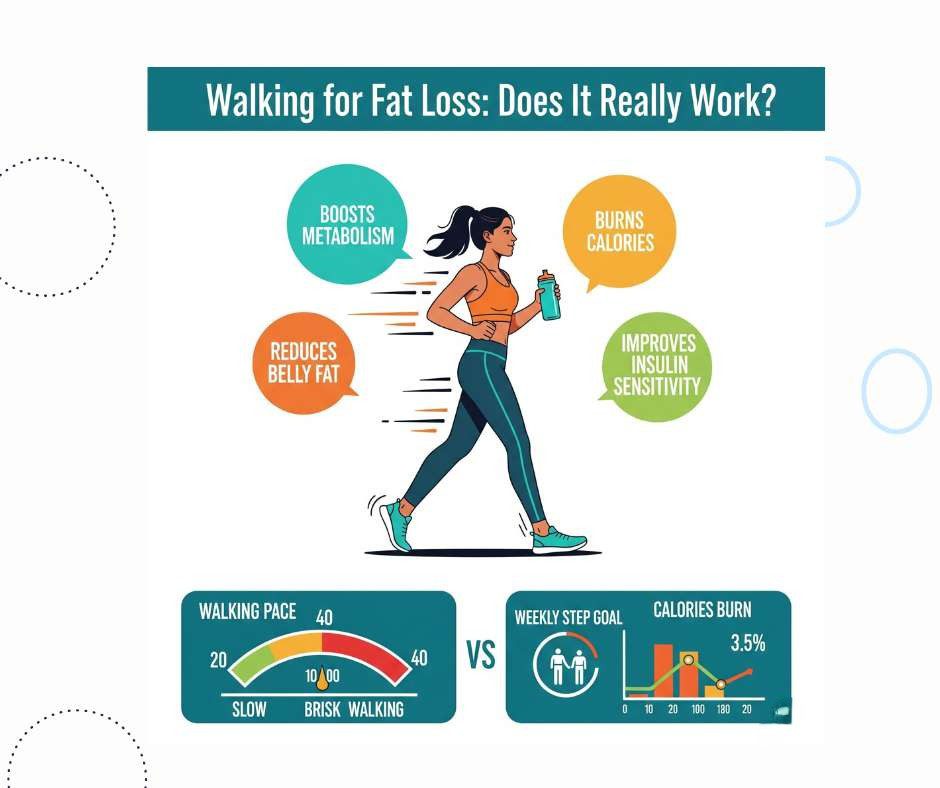
You don’t have to be dripping in sweat to burn fat. Walking at a brisk pace can torch anywhere from 200–400 calories per hour, depending on your speed and body weight.
What makes it even better?
- It’s low impact (easy on joints)
- It doesn’t exhaust your nervous system
- You can do it every single day
Consistency beats intensity when it comes to long-term fat loss.
2. Taps Into Stored Fat
Walking is a form of steady-state cardio, which means it primarily uses fat as fuel. That’s right—your body doesn’t need to rely on quick carbs (like during HIIT or lifting). Instead, it pulls from fat stores while you move at a steady pace.
3. Easy to Stick To
Let’s face it—sustainability is key. You don’t need fancy gear or a gym membership. Whether it’s a 15-minute walk after lunch or a weekend hike, walking fits into any schedule.
It’s also mentally refreshing. Many people say walking helps them think more clearly or decompress after a stressful day. That emotional boost makes you more likely to stick with it.
How to Make Walking Burn Fat More Effectively
If you’re serious about using walking as a fat-loss tool, here are some simple strategies to make it work harder for you.
1. Pick Up the Pace
Aim for a brisk pace—one where you can still talk, but you’re slightly out of breath. This usually means walking around 3.5–4 miles per hour.
Speed walking = higher heart rate = more calories burned.
2. Walk After Meals
Post-meal walks (especially after dinner) can:
- Lower blood sugar spikes
- Aid digestion
- Prevent fat storage
- Help you sleep better
Even 10–15 minutes after meals can make a difference.
3. Use a Weighted Vest or Backpack
Want to up the challenge without running? Add light resistance:
- A weighted vest
- A backpack with books or water bottles
This helps activate more muscles and burn more calories—without going full beast mode.
4. Try Walking Intervals
Intervals aren’t just for the treadmill. Try this on your next walk:
- 2 minutes slow
- 2 minutes fast
- Repeat for 20–30 minutes
This combo keeps your body guessing and revs up your metabolism.
5. Track Your Steps
Start by figuring out how much you currently walk. Then slowly increase:
- 5,000 steps a day = good
- 7,500 steps = better
- 10,000+ steps = fat-burning sweet spot
Use a fitness tracker, pedometer app, or even your phone to stay consistent.
Real Talk: What Kind of Results Can You Expect?
Walking alone won’t give you six-pack abs overnight—but paired with a balanced diet, it absolutely leads to fat loss over time. In fact, studies have shown people who walk regularly:
- Have lower body fat percentages
- Are less likely to gain weight back
- Maintain better long-term health than those who don’t
Example: Jenna’s Walking Win
Jenna, 41, had tried countless workouts and diets. Nothing stuck. She started walking 30 minutes a day during her lunch break and noticed her jeans fitting better after just 3 weeks. No gym. No stress. Just a daily habit that worked.
How to Build a Fat-Loss Walking Plan (Your Weekly Guide)
Here’s a simple plan to get started:
| Day | Goal |
|---|---|
| Monday | 30-minute brisk walk |
| Tuesday | 20-minute post-meal walk + 10 min stair walk |
| Wednesday | 30-minute interval walk (fast/slow) |
| Thursday | Light walk or rest |
| Friday | 40-minute evening walk |
| Saturday | Hike or long walk with a friend |
| Sunday | 30-minute walk with light hills |
Mix and match based on your energy and schedule. The key is to move daily.
Bonus: Pair It With Smart Nutrition
Walking supports fat loss—but only when paired with eating habits that don’t sabotage your progress. A few walking-friendly nutrition tips:
- Stay hydrated
- Avoid sugary snacks before walks
- Eat balanced meals with lean protein, healthy fats, and fiber
- Don’t over-reward yourself (“I walked, so I deserve a donut!”)
Remember: Fat loss happens when your body burns more than it stores. Walking helps with the burn, but food controls the store.
Final Thoughts: Is Walking Enough?
If you’re just getting started or coming back from a break, walking is the perfect way to ease into fat loss without overwhelming your body or mind. It’s simple, low-pressure, and easy to adjust as you go.
Want to build strength too? You can always add resistance band workouts, bodyweight exercises, or weight training later.
But walking? That’s your base. That’s your go-to. And yes—it really works.
FAQs
Q1: How long should I walk to burn fat?
Aim for 30–60 minutes of brisk walking most days of the week. If that’s too much, start with 15–20 minutes and work your way up.
Q2: Is walking better than running for fat loss?
Both are great. Walking is easier on your joints and more sustainable, especially for beginners or those recovering from injury. Running burns more calories per minute, but consistency matters more than speed.
Q3: What’s the best time of day to walk for fat loss?
Whenever you can stick to it. Morning walks can jumpstart your metabolism, but post-meal walks help with fat storage and digestion. Choose what fits your lifestyle best.
Want more real-world fitness strategies and step-by-step workout guides? Visit https://fitifys.com for simple plans that actually fit into your life.
Let me know if you’d like this turned into a downloadable walking calendar or printable fat-loss tracker!